
BOI plots Sri Lanka’s Future: Smart, Sustainable and Structured
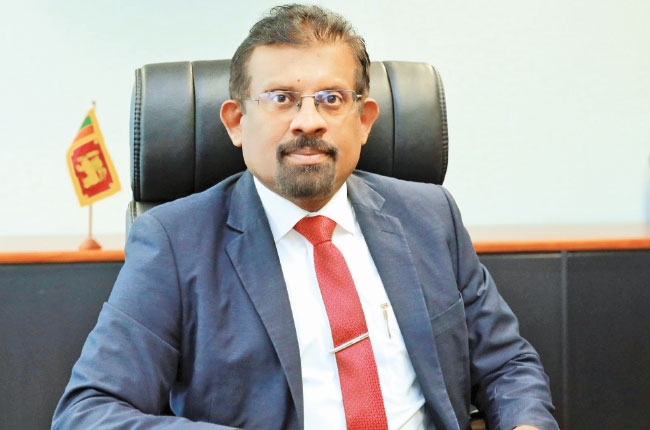
Acting BOI Chairman outlines an ambitious agenda anchored in AI, green energy, and structural reform to draw future-ready foreign investment to the island
Dr. Sulakshana Jayawardena
The Board of Investment of Sri Lanka (BOI) is launching a transformative agenda to reposition the island as a high-value hub for foreign direct investment (FDI), centering on a “Triple-S Pillar” of smart technology, sustainability, and structured development. By leveraging AI-driven services, green energy, and administrative digitization, the initiative aims to move beyond low-cost labor and attract future-ready investments into key sectors like IT and renewable energy.
Exclusive interview with Acting BOI Chairman Dr. Sulakshana Jayawardena

The Board of Investment of Sri Lanka (BOI) is charting a bold new course under its newly appointed Acting Chairman, who has unveiled a sweeping transformation agenda built around what he calls the “Triple-S Pillar” — Smart, Sustainable, and Structured. Taking charge at a pivotal moment in Sri Lanka’s economic recovery, the Acting Chairman says he is determined to reposition the island as a destination for future-ready foreign direct investment (FDI), leveraging technology, green energy, and institutional reform.
Central to the BOI’s transformation is the integration of artificial intelligence into investor services with in the year 2027, the organization’s flagship One-Stop-Shop is set to deploy AI-driven predictive tools capable of identifying bureaucratic bottlenecks before they arise, automatically flagging deviations in project timelines for senior intervention. The BOI is also advancing plans for “Digital Twins’ of its Export Processing Zones, enabling global investors to virtually tour infrastructure, simulate utility loads, and plan factory layouts remotely using real-time data — a move aimed at removing geographical friction from the investment decision.
The BOI’s approach to Industry 4.0 signals a clear departure from Sri Lanka’s historical reliance on low- cost labor as its primary competitive proposition. The Acting Chairman notes that modern investors seek “smart” labor rather than simply cheap labour. To that end, the incentive regime has been overhauled to include “Innovation Bonuses”for projects incorporating robotics, the Internet of Things, and high-level automation. A newly envisaged Northern Tech Frontier — comprising IT-dedicated zones in the North — is intended to harness the region’s digital-native workforce for software engineering and AI development, moving the country up the value chain beyond basic manufacturing. Furthermore, collaborating with universities, vocational institutes, and private sector partners to develop specialized training in AI, data science, cybersecurity, advanced manufacturing, and embedded systems, while also promoting industry-led curricula and internship pipelines. In parallel, regional initiatives such as tech parks and IT zones are creating localized talent ecosystems outside Colombo. Hence, it will ensure a job-ready, globally competitive workforce, enabling investors to scale operations efficiently while positioning Sri Lanka as a high-value, knowledge-driven investment destination.

Sustainability, the Acting Chairman insists, is not merely a buzzword but a genuine competitive advantage. Drawing on his background in the power sector, he is steering the BOI to leverage the National Energy Policy 2025-2030 to guarantee high-scale investors access to green energy credits. Sri Lanka is actively pitching for electric vehicle assembly plants in the South and green hydrogen infrastructure in Trincomalee, aligning the investment drive with the net-zero mandates that major multinational corporations must now satisfy. With over 40 gigawatts of offshore wind potential, the BOI is issuing Requests for Information for large-scale green ammonia and hydrogen projects, targeting USD 500 million in offshore energy infrastructure by 2030.
Building on a record 2025 — during which Sri Lanka surpassed USD 1 billion in FDI and approved 146 projects valued at USD 1.906 billion across manufacturing (46 per cent), port development (26 per cent), and tourism (11 per cent) — the Acting Chairman has identified three immediate priorities: ensuring the USD 1.9 billion in approved projects move swiftly from paper to ground; fully operationalizing digital reporting and approval systems; and bridging the gap between investment approvals and infrastructure readiness, particularly in the renewable energy sector. To sustain momentum, the BOI is shifting from generic investment marketing toward pitching 20 “ready-to-invest” structured projects, offering concrete business cases in high-growth areas such as Port City and renewable energy hubs.
Beyond the apparel sector that has long anchored Sri Lanka’s industrial identity, the BOI is actively promoting high-value investment in pharmaceuticals centered on the Hambantota Hub, IT and AI-driven service hubs, and integrated University Towns combining education and research with industrial activity. Infrastructure for the Hambantota Pharma Hub, including wastewater systems in Eravur and Hambantota, is being fast-tracked, while land identification and digital connectivity partnerships are underway for Northern IT Zones to tap the region’s high-skilled talent pool.
Further, the BOI has already structured over 30 ready-to-invest projects across several priority sectors such as IT Parks, API manufacturing, EV assembling, Textile manufacturing, Tourism & Leisure, logistics, Residential apartments, mixed developments, Dairy Processing, etc. These projects are supported with land allocation, assess financial feasibility based on assumptions, and policy facilitation in terms of investment incentives and fast-track approvals, making them highly attractive to global investors seeking quick market entry.
The Board of Investment of Sri Lanka is in the final stages of preparation and will be formally launching these opportunities in the near future. On the administrative front, the BOI Accelerator Program is a two-year action plan with clearly identified 80 action points, designed to provide a clear roadmap for streamlining the BOI’s activities in investment promotion, attraction, facilitation, and aftercare services. The program has already been approved by the BOI Board and is currently being implemented. Further to human capital development, the BOI has started a new online portal that have already reduced initial registration times significantly, with account verification now completed within four hours. The organization is moving toward a Single Window system integrating all line-agency approvals digitally. Internally, a Document Management System (DMS) is being rolled out as the first phase of a broader digitalization of intra-organizational processes, establishing a secure, centralized platform with metadata- driven storage, role-based access control, version management, and full audit trail capabilities. The system is designed to integrate seamlessly with existing enterprise platforms, including the BOI Gateway, ERP, CRM, e- mail, and cloud storage, while also migrating legacy and paper-based records from identified departments.
Sri Lanka’s positioning as a multi-polar hub for regional trade is reflected in its approach to bilateral investment relationships. The BOI is facilitating major Indian investments in renewable energy, Chinese participation in Port City, and UAE interests in logistics, with a conscious strategy of ensuring these investments are complementary rather than competitive. The Acting Chairman notes that ongoing Middle Eastern tensions, while affecting logistics, simultaneously highlight Sri Lanka’s value as a safe, stable alternative hub in the Indian Ocean, a narrative the BOI intends to market as a core competitive advantage. Regional equity is a pronounced theme in the agenda. The BOI is in consultation with relevant government stakeholders for projects located outside the Western Province to provide a better stimulus package. For example, the Sooriyawewa University Town initiative is designed to create localized economic ecosystems that reduce migration pressure on Colombo. The BOI is also partnering with vocational training institutes and the private sector to align curricula with the requirements of high-tech investors, while the University Towns concept specifically integrates research and development centers within industrial zones to provide what the Acting Chairman describes as a “plug-and-play” talent pipeline. The investments beyond the Western Province through a pipeline of region-specific zones, techno parks, and structured projects across the Northern, Eastern, and Southern regions. This approach is supported by targeted incentives, land facilitation, and infrastructure aligned with each region’s strengths—such as logistics, agriculture, IT, energy, and tourism.
Jayawardena brings 23 years of experience in public administration through the Sri Lanka Administrative Service, which he says gives him an intimate understanding of inter-agency coordination and the systemic origins of bureaucratic bottlenecks. He has committed to quarterly meetings with the top 50 existing investors, arguing that investor satisfaction on the ground is the most effective promotional tool available. Long-term continuity is being addressed through the digitization of project pipelines, ensuring that each project’s history, requirements, and challenges are documented and visible to prevent disruption during leadership transitions. The continuation of smooth operation is vital, and ensuring continuity of major investments is fundamentally about building confidence and minimizing risk for the investors. It will continuously strengthen project monitoring systems, legal safeguards, and dedicated investor facilitation to ensure that all approved projects move forward without disruption.
We are maintaining close engagement with investors through structured aftercare and issue-resolution mechanisms, while digital tracking and inter-agency coordination help keep projects on schedule. This approach ensures stability, consistency, and long-term reliability, which are critical for sustaining investor trust and project continuity.
Addressing the postponement of the Sri Lanka Investment Forum 2026, the Acting Chairman characterized the delay as a “strategic pause” rather than a retreat, attributing it to regional logistics considerations and describing it as a recalibration intended to deliver a higher-impact event later in the year. Investor engagement in the interim is being maintained through one-on-one dialogue. With USD 1.9 billion in approved projects awaiting ground-breaking and an ambitious 2026 FDI target on the horizon, the Acting Chairman’s message is unambiguous: Sri Lanka is open, organized, and positioning itself for the next generation of global investment.
The BOI has introduced an ambitious “Triple-S Pillar” agenda focused on Smart, Sustainable, and Structured reforms to attract future-ready foreign investments. Key initiatives include AI integration for investor services, creating virtual “Digital Twins” for Export Processing Zones, and enhancing workforce training in advanced technologies. This approach aims to elevate Sri Lanka’s competitive edge beyond low-cost labour.
The BOI is guided to harness the National Energy Policy for green energy access while promoting electric vehicle assembly and green hydrogen infrastructure, aiming for USD 500 million in offshore energy by 2030.The BOI is promoting high-value investments in pharmaceuticals, IT, AI, and integrated University Towns in Sri Lanka. It has structured over 30 projects across various sectors, offering land and financial feasibility support. The BOI Accelerator Program is streamlining investment activities, while digital initiatives enhance efficiency and integration of services. Sri Lanka aims to be a multi-polar trade hub, fostering bilateral investments in renewable energy, logistics, and Port City projects.
The BOI strategically promotes regional collaboration, supports projects outside the Western Province, and partners with educational institutions to align skills with industry needs. The Acting Chairman emphasizes investor satisfaction, continuity, and project monitoring to enhance investor confidence and minimize risks.Investor engagement in the interim is being maintained through one-on-one dialogue. With USD 1.9 billion in approved projects awaiting ground-breaking and an ambitious 2026 FDI target on the horizon, the Acting Chairman’s message is unambiguous: Sri Lanka is open, organized, and positioning itself for the next generation of global investment.
Source: Daily News


Recent Comments